
Universal Design for Learning (UDL) Training Manual
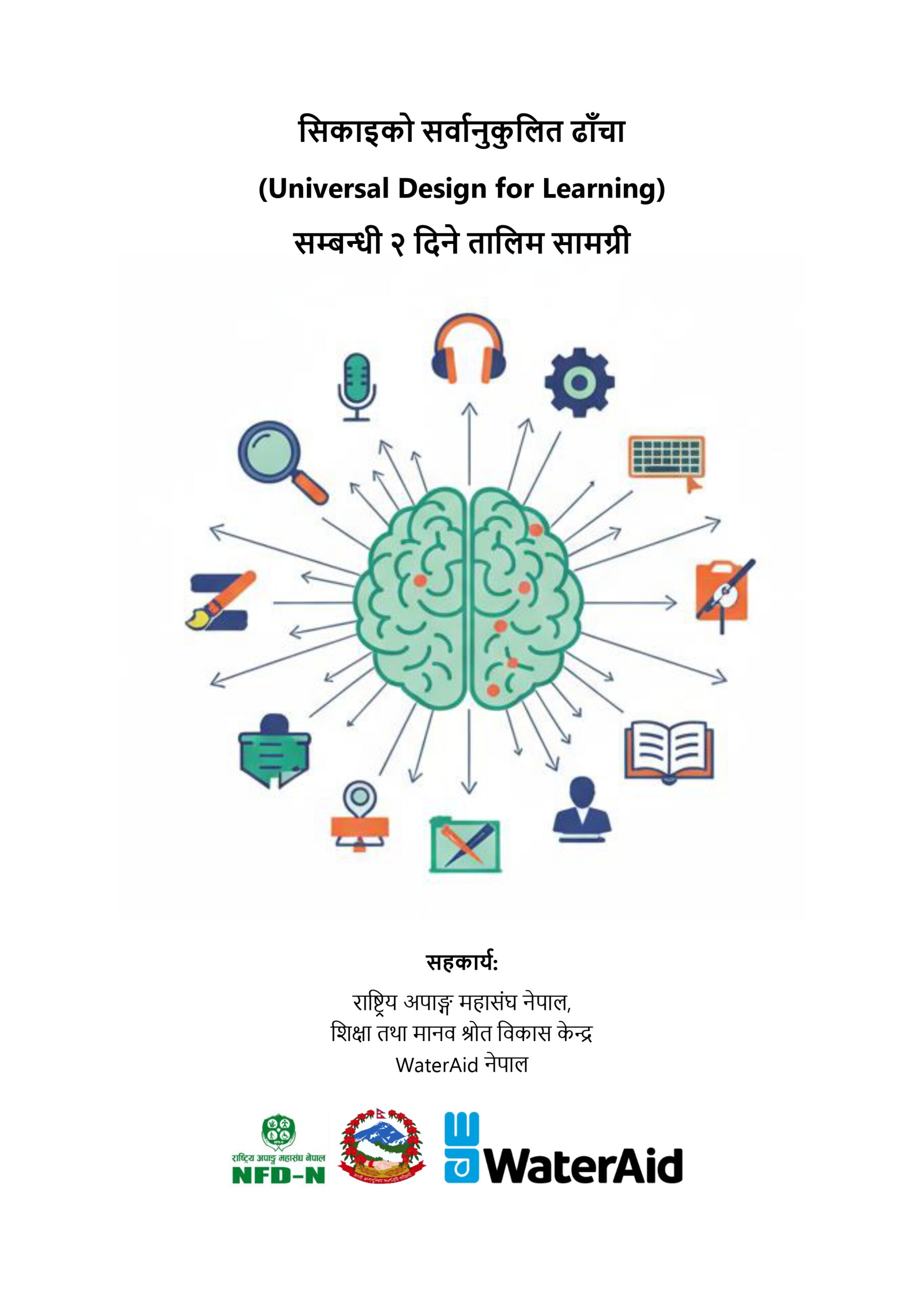
The National Federation of the Disabled Nepal (NFDN) has published a Universal Design for Learning (UDL) Training Manual to support the advancement of inclusive and accessible education practices in Nepal.
The manual has been developed to respond to persistent gaps in classroom practices related to learning diversity, disability inclusion, and accessibility. While Nepal has adopted progressive constitutional, legal, and policy frameworks to ensure the right to education for persons with disabilities, many schools continue to face challenges in translating these commitments into inclusive teaching–learning processes. Universal Design for Learning provides a practical framework to address these challenges by promoting flexible, learner-centered approaches that accommodate variability among learners from the outset.
This two-day training manual is designed primarily for teachers, facilitators, and education practitioners working at the basic education level. It provides structured guidance on inclusive education concepts, disability and functional limitations, learner diversity, assistive and accessible technologies, reasonable accommodation, classroom management, and school-level inclusive planning. The manual integrates UDL principles with national education policies and international human rights commitments, including the UN Convention on the Rights of Persons with Disabilities and the Sustainable Development Goals.
The manual has been developed under the WASH GAINS project through the collaboration of National Federation of the Disabled Nepal (NFDN) and WaterAid Nepal, in coordination with relevant government stakeholders. Technical authorship was provided by Dr. Birendra Raj Pokharel, Expert Member of the Special Education Council, Ministry of Education, Science and Technology, Government of Nepal. The development process also benefited from alignment with national inclusive education guidelines facilitated by Mr. Deepak Majhi, Section Officer, Center for Education and Human Resource Development.
The training manual is written in Nepali to ensure accessibility, contextual relevance, and practical usability for educators across diverse settings in Nepal. It is intended to be used both as a training facilitation guide and as a reference document to support the ongoing application of inclusive and accessible teaching practices at the classroom and school levels.
Share this post:


