
Post-Global Disability Symposium (GDS) 2025
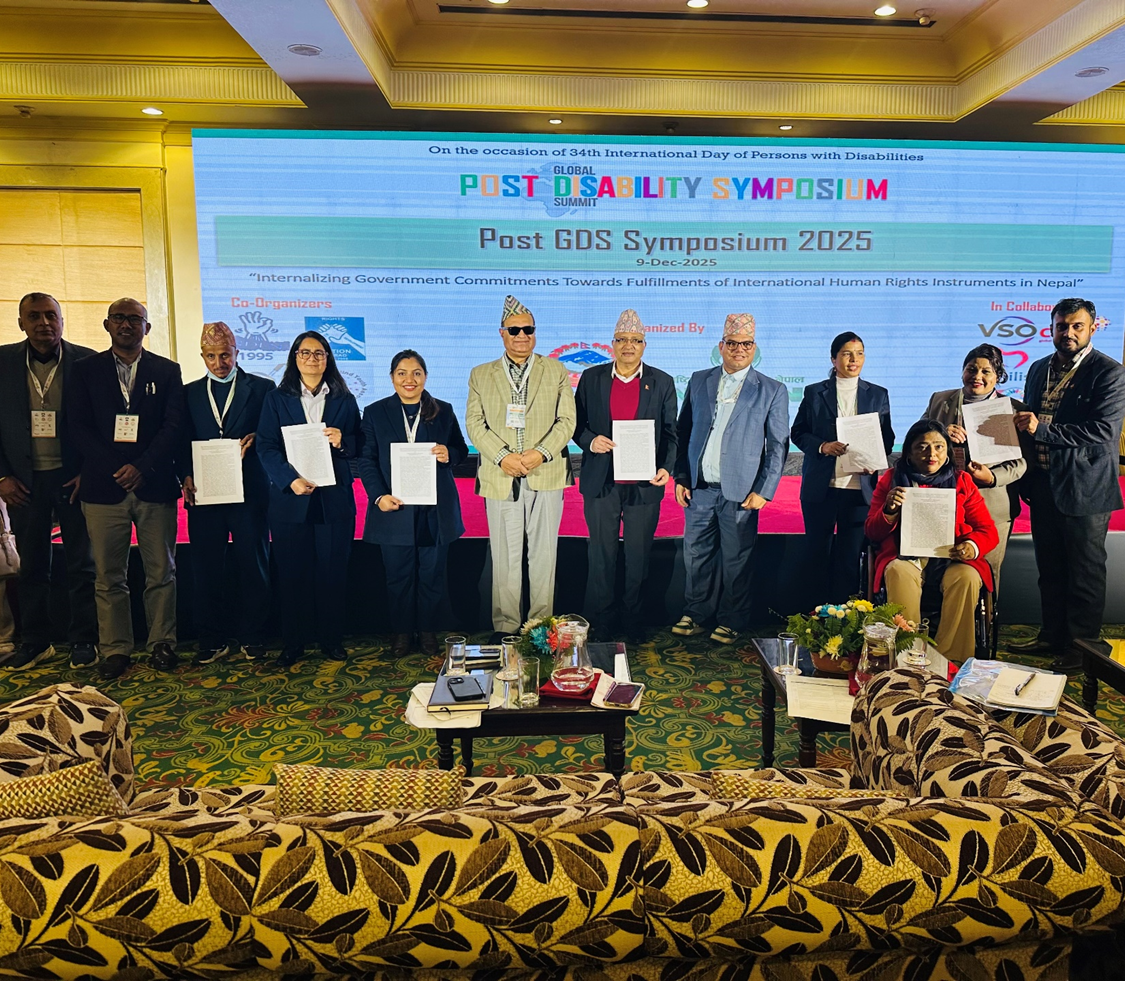
Report of Post-Global Disability Symposium (GDS) 2025
Internalizing Government Commitments towards Fulfillment of International Human Rights Instruments in Nepal
Date: December 09, 2025
Venue: The Everest Hotel, New Baneshwor, Kathmandu
Jointly organized by: National Federation of the Disabled Nepal (NFDN) and Ministry of Women Children and Senior Citizen in collaboration with key Organizations of Persons with Disabilities (OPDs) and development partners
Executive Summary
The Post-Global Disability Symposium 2025 was successfully convened in Kathmandu on December 9, 2025, bringing together government representatives, Organizations of Persons with Disabilities (OPDs), development partners, UN agencies, and civil society to deliberate on the implementation of the Amman-Berlin Declaration adopted at the Global Disability Summit (GDS) 2025 in Berlin. The symposium served as a critical platform to bridge the gap created by the Government of Nepal’s absence from the GDS and to internalize global commitments into national policy frameworks.

The event achieved significant outcomes including enhanced awareness among key government ministries about the Amman-Berlin Declaration, substantive thematic dialogue on disability-inclusive development across multiple sectors, and the drafting of the “Kathmandu Call for Action” – a 43-point declaration representing Nepal’s collective commitment to disability inclusion. The symposium concluded with the formal presentation of an OPD memorandum to government representatives, establishing a foundation for future advocacy and accountability in implementing both the Amman-Berlin Declaration and Nepal’s obligations under the UN Convention on the Rights of Persons with Disabilities (UNCRPD).
Introduction and Background
Context and Rationale
The Post-Global Disability Symposium (GDS) 2025 was originally planned to be held during the second week of September 2025 immediately after the Global Disability Summit in Berlin. However, the event was unavoidably postponed due to the nationwide protest movement that occurred at the time, which made it impossible to convene the participation of government stakeholders. Consequently, the symposium was rescheduled and organized during the week marking the 34th International Day of Persons with Disabilities (IDPD), transforming the occasion into both a policy dialogue and a commemorative national event.
This symposium was jointly organized by the National Federation of the Disabled Nepal (NFDN) and the Ministry of Women, Children and Senior Citizens, and was co-organized by key national OPDs including Action on Disability Rights and Development (ADRAD), Blind Youth Association Nepal (BYAN), Nepal Disabled Women Association (NDWA), National Federation of the Deaf Nepal (NDFN) and Nepal Association of the Blind (NAB). Development partners participated as collaborators, including CBM Global, Humanity & Inclusion, Karuna Foundation, VSO Nepal, WaterAid Nepal, Abilis Foundation, the Association of International NGOs (AIN) Disability Working Group, and LNOB Nepal Partnership.
Through this collaborative effort, the symposium brought together government authorities, OPDs, development partners, UN agencies and civil society to reflect on the Amman-Berlin Declaration adopted at GDS 2025, review Nepal’s existing disability inclusion landscape, and internalize global commitments into national plans, policies and implementation frameworks.
Evolution of the Global Disability Summit
The Global Disability Summit is the world’s leading global platform dedicated to advancing the rights, dignity, and inclusion of persons with disabilities. Established in 2018, the Summit was launched to accelerate implementation of the UN Convention on the Rights of Persons with Disabilities (CRPD) and strengthen international cooperation for inclusive development.
The first Summit in London in 2018 and the second in 2022 marked historic turning points by generating major commitments from governments, development partners, and civil society. Building on these milestones, GDS 2025 in Berlin brought together over 4,700 participants from more than 160 countries, demonstrating the growing scale of participation and the increasing number of commitments to the global disability rights movement. The adoption of the landmark Amman-Berlin Declaration set a bold global target to ensure meaningful disability inclusion across development and humanitarian actions worldwide.
Nepal’s Disability Inclusion Landscape
Nepal has demonstrated strong constitutional and policy commitments to disability inclusion, particularly through the Constitution of Nepal 2072 and the 2017 Rights of Persons with Disabilities Act. However, a significant implementation gap remains between policy frameworks and ground-level realities. While improvements have been made in areas such as inclusive education policies, employment reservations, political participation, and accessibility in some urban infrastructures, substantial gaps persist in accessible transport, assistive technologies, inclusive health services, disaster risk reduction and disability-disaggregated data.
The current status reveals both progress and persistent challenges. Many local governments show willingness to work on inclusion but lack technical expertise, and progress remains uneven across provinces and sectors. With Nepal’s adoption of federalism, local governments now possess authority to formulate context-specific policies, presenting both opportunities and challenges for advancing disability-inclusive development nationwide.
Symposium Objectives
Overall Objective
To secure a preliminary commitment from the Government of Nepal to effectively contextualize and localize the GDS Amman-Berlin Declaration, with support from multilateral and bilateral agencies and in alignment with the UNCRPD framework.
Specific Objectives
The symposium was designed to achieve the following specific objectives:
- Introduce and contextualize the Amman-Berlin Declaration: Formally present the declaration to government representatives and other stakeholders, highlighting its relevance to Nepal’s national priorities and existing frameworks.
- Share Learnings and Commitments: Provide a platform for OPD representatives who attended GDS 2025 to share their experiences, key learnings, and the commitments they made on behalf of Nepal’s disability movement.
- Promote Thematic Discussion and Dialogue: Facilitate high-level discussions with government ministries on how to translate the declaration’s commitments into concrete actions and policies in key areas such as inclusive education, health, disability data (focusing on Citizen Generated Data), disaster risk reduction, and employment.
- Encourage Future Government Engagement: Build awareness among government stakeholders about the importance of the GDS declaration and encourage the Government of Nepal to prepare and place its own official declaration at the next GDS in 2028.
Program Structure and Methodology
The symposium was structured into two synergistic phases:
Pre-Execution Phase (Preparatory Activities)
Prior to the main event, extensive preparatory work was undertaken to ensure the symposium would be well-informed, inclusive and yield tangible outcomes:
Desk Review and Contextualization: A thorough review of commitments made by Nepali OPDs at GDS 2025, analyzing their alignment with the Amman-Berlin Declaration, the UNCRPD and Nepal’s national development agenda.
Consultative Planning: Planning discussions with key OPDs to refine the concept and agenda, ensuring the event was guided by the experiences and priorities of persons with disabilities.
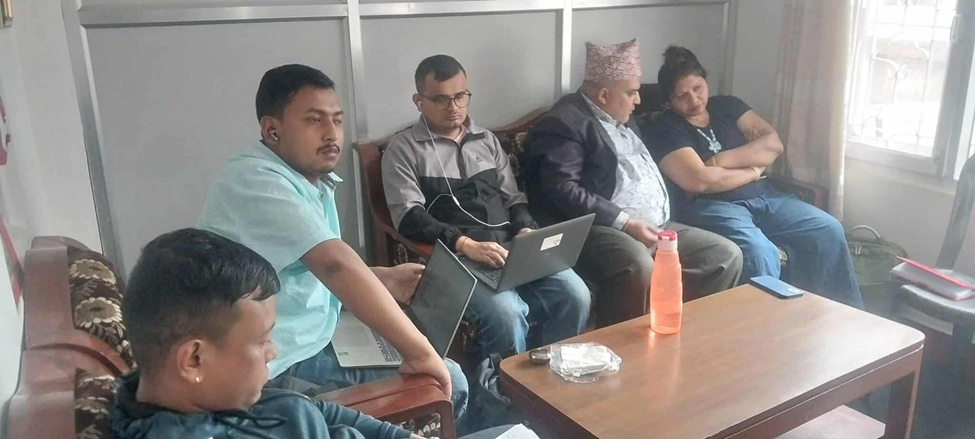
Stakeholder Consultations: Extensive discussions with the Association of International NGOs (AIN) disability working group, key UN agencies, and multilateral/bilateral agencies to secure their input, commitment, financial and technical support.
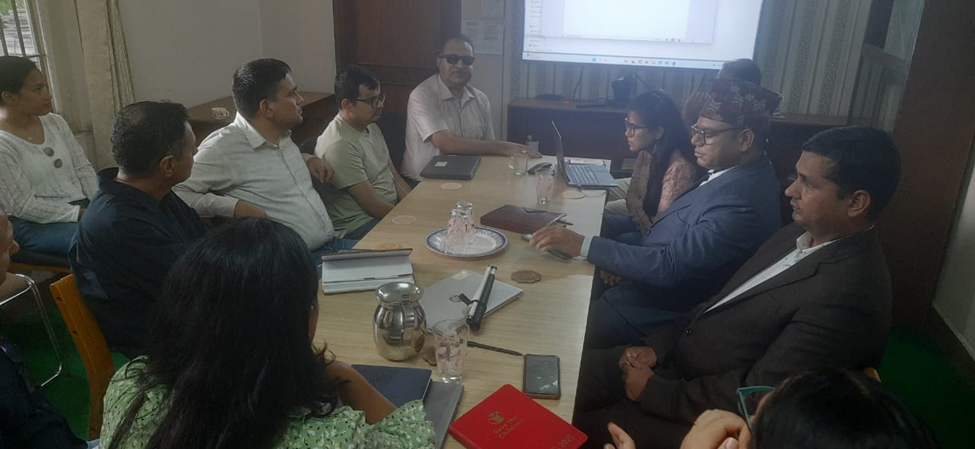
Government Engagement: Dedicated meetings with high-level representatives from key government agencies including the Ministry of Women, Children, and Senior Citizens; the National Planning Commission; the Ministry of Finance; the Ministry of Education, Science and Technology; the Ministry of Labor, Employment and Social Security; the National Statistics Office; the National Disaster Risk Reduction and Management Authority; the Ministry of Health and Population; and the Ministry of Federal Affairs and General Administration to secure their early engagement and ownership of the symposium objectives.
Accessibility and Reasonable Accommodation Measures
Ensuring accessibility and inclusive participation was a key priority in the planning and execution of the Post-Global Disability Symposium 2025. The program venue, The Everest Hotel, New Baneshwor, Kathmandu, was largely accessible and enabled the participation of persons with diverse disabilities. The venue provided step-free access, accessible seating arrangements, and adequate movement space to facilitate the participation of wheelchair users and persons with mobility impairments.
To ensure complete and effective communication for all participants, Nepali Sign Language Interpretation (SLI) was provided throughout the program for Deaf participants. Live captioning services were also arranged to support participants with hearing impairments and others who benefit from real-time text-based communication. In addition, large digital display screens were used to enhance the visibility of presentations and live captions, supporting participants with low vision and ensuring clearer access to information.
These accessibility and reasonable accommodation measures significantly contributed to creating an inclusive, participatory, and rights-based environment, consistent with the principles of universal design, effective communication, and Nepal’s commitments under the UN Convention on the Rights of Persons with Disabilities (UNCRPD).
Execution Phase (One-Day Symposium)
The main symposium on December 9, 2025, was organized into four major sessions:
Session 1: Opening Session – Bridging the Global to the National
High-level opening with government officials and OPD representatives to formally launch the symposium and underscore the importance of the Amman-Berlin Declaration.
Session 2: Technical Session – OPD Presentations on GDS Commitments
Focused presentations by OPDs who participated in GDS 2025, sharing their commitments and experiences.
Session 3: Technical Session – Thematic Presentations
Presentations by development partners and government ministries on key commitment areas including inclusive education, health and rehabilitation, employment, WASH accessibility, and disaster risk reduction.
Session 4: Thematic Group Work and Call to Action
Parallel working group discussions on 11 thematic areas, culminating in the development of the Kathmandu Call for Action.
Session 5: Closing Session
Presentation of the 43-point Kathmandu Call for Action and formal handover of the OPD memorandum to government representatives.
Key Stakeholders and Participation
The symposium successfully brought together a powerful coalition of stakeholders essential for translating global commitments into national action:
Organizations of Persons with Disabilities (OPDs)
The symposium was led by the National Federation of the Disabled Nepal (NFDN), with strong representation from:
- Action on Disability Rights and Development Nepal (ADRAD)
- Blind Youth Association Nepal (BYAN)
- Nepal Disabled Women Association (NDWA)
- National Federation of the Deaf Nepal (NDFN)
- Nepal Association of the Blind (NAB)
Government Agencies
Key government participation included representatives from:
- Ministry of Women, Children, and Senior Citizens (primary government partner)
- National Inclusion Commission
- National Disaster Risk Reduction and Management Authority (NDRRMA)
- Ministry of Labour, Employment and Social Security
- Ministry of Education, Science and Technology
- Ministry of Health and Population
- National Statistics Office
Development Partners and Civil Society
- CBM Global
- Handicap International (Humanity & Inclusion)
- VSO Nepal
- WaterAid Nepal
- Karuna Foundation Nepal
- Abilis Foundation
- Save the Children
- Association of International NGOs (AIN) Disability Working Group
- LNOB Nepal Partnership
Advisory and Coordination Structures
Steering Committee: Provided strategic oversight and guidance, convened by Dr. Birendra Raj Pokharel (Abilis Foundation Country Coordinator and ADRAD Executive Director) with leadership from NFDN, BYAN, NAB, NDWA, NDFN, and development partners.
Advocacy Task Force: Led advocacy and lobbying efforts before, during, and after the symposium.
Program Execution Task Force: Managed logistical and operational execution, drawn from organizing secretariats.
Key Learning Outcomes of the Symposium
The Post-Global Disability Symposium 2025 provided a critical platform for multisectoral engagement, resulting in the following key learning outcomes that will inform Nepal’s national approach to disability inclusion:
- Bridging the Global-to-National Gap: The symposium successfully addressed the critical gap created by the Government of Nepal’s absence from the GDS 2025 by formally presenting and contextualizing the Amman-Berlin Declaration. This led to enhanced awareness among key government ministries about the declaration and its direct link to Nepal’s UNCRPD implementation.
- Government Ownership and Commitment: The event secured the Ministry of Women, Children and Senior Citizens (MoWCSC) as the primary government partner, ensuring early engagement and ownership of the symposium’s objectives from a central government body. The symposium concluded with a preliminary commitment to contextualize and localize the Amman-Berlin Declaration.
- Strengthened Partnership and Coordination: The symposium facilitated stronger collaboration and a unified approach by bringing together a “powerful coalition” of stakeholders: OPDs, key government ministries, national commissions, and development partners (UN agencies, I/NGOs).
- Identification of Implementation Gaps: The technical sessions effectively highlighted the persistent implementation gap between Nepal’s strong constitutional and policy commitments (e.g., Constitution of Nepal 2072, 2017 Rights of Persons with Disabilities Act) and the ground-level realities. Key gaps identified include:
- Lack of universal accessibility in public infrastructure and services.
- Weak enforcement of employment quotas and lack of clarity on reasonable accommodation.
- Fragmentation and medical bias in disability-disaggregated data.
- Insufficient resources and lack of trained personnel for inclusive education and rehabilitation.
- Formulation of a Consolidated National Agenda: The thematic group work and final session led to the development of the “Kathmandu Call for Action,” a 43-point declaration. This document provides a foundational, collaborative agenda for future advocacy and accountability, aligning GDS commitments with Nepal’s national development priorities and the road to GDS 2028.
- OPD Leadership Amplified: The event provided a formal platform for OPD representatives to share their experiences, key learnings, and the specific commitments they made at GDS 2025, cementing the event as a disability-led initiative.
Proceedings of the Symposium
Opening Session: Setting the Context
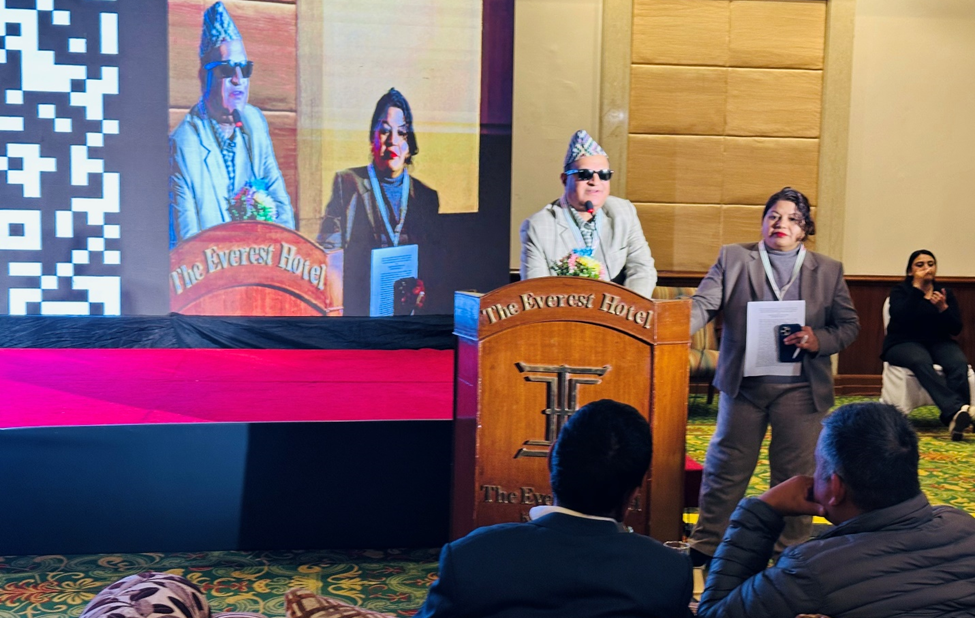
The symposium commenced with a demonstration of inclusiveness within the disability community itself. The event was jointly facilitated by Dr. Birendra Raj Pokharel and Ms. Debu Parajuli, ensuring gender balance and representation of persons with visual and physical disabilities in the master of ceremony roles.
Welcome Remarks
Mr. Kumar Regmi, Federal Treasurer of NFDN and a person with hearing impairment, delivered the welcome address, warmly receiving all participants and setting an inclusive tone for the day’s proceedings.
Inaugural Address
Mr. Hari Datta Joshi, Chief Commissioner of the National Inclusion Commission and Chief Guest of the symposium, inaugurated the event by reading the program banner, formally opening the symposium and emphasizing the government’s commitment to disability inclusion.
Background on the Global Disability Summit
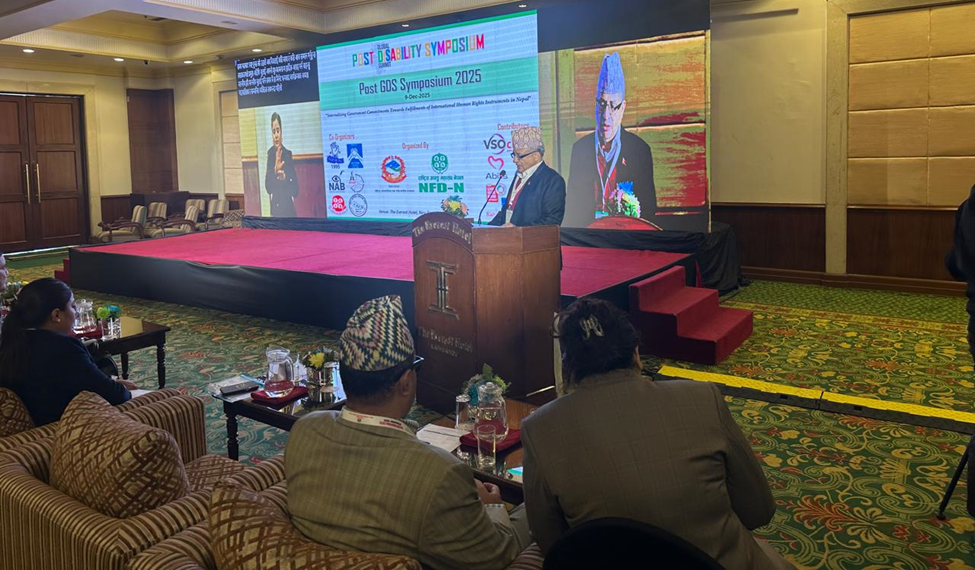
Dr. Birendra Raj Pokharel provided comprehensive context on the Global Disability Summit, explaining its evolution and significance. He highlighted that the GDS is the world’s leading global platform dedicated to advancing the rights, dignity, and inclusion of persons with disabilities. He traced its establishment in 2018 to accelerate UNCRPD implementation and strengthen international cooperation for inclusive development. He noted that the first Summit in London (2018) and the second in 2022 marked historic turning points by generating major commitments from governments, development partners, and civil society.
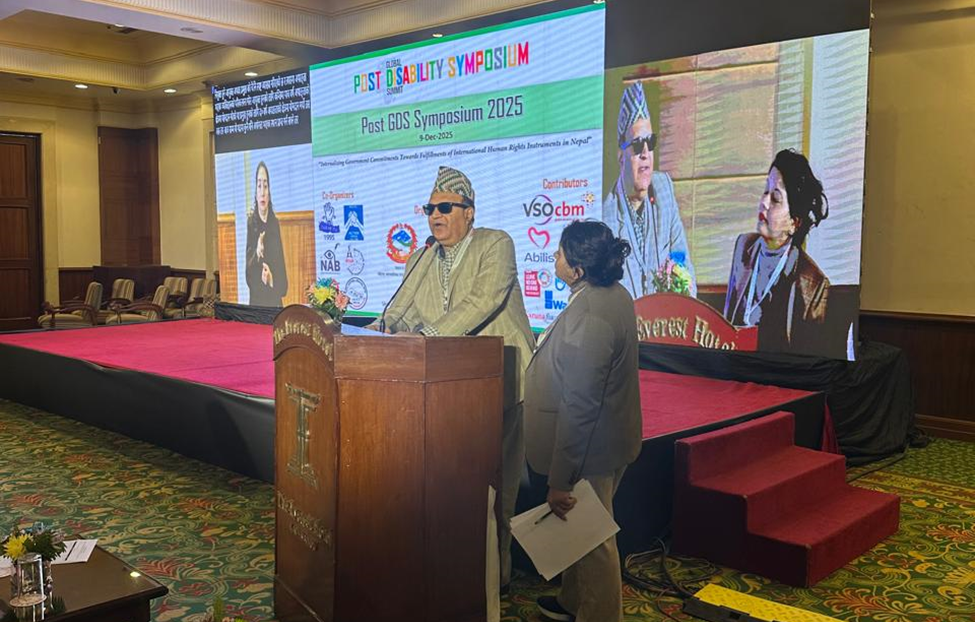
Dr. Pokharel emphasized that GDS 2025 in Berlin brought together over 4,700 participants from more than 160 countries and adopted the landmark Amman-Berlin Declaration, setting the bold global target of “15 percent for the 15 percent” to ensure meaningful disability inclusion across development and humanitarian actions.
Keynote Addresses
Keynote Address 1: NFDN Federal President
Mr. Devi Datta Acharya, Federal President of NFDN, delivered a powerful keynote address emphasizing the urgency of advancing disability inclusion in Nepal. He highlighted that although the country has demonstrated strong constitutional and policy commitments—particularly through the Constitution of Nepal 2072 and the 2017 Rights of Persons with Disabilities Act—the implementation gap remains significant.
Mr. Acharya stressed that disability inclusion is not only a rights-based obligation but also a prerequisite to achieving the Sustainable Development Goals, climate adaptation, social justice, and truly inclusive national development. He noted current progress in areas such as inclusive education policies, employment reservations, political participation, and accessibility in some urban infrastructures, while acknowledging substantial gaps in accessible transport, assistive technologies, inclusive health services, disaster risk reduction, and disability-disaggregated data.

He emphasized that many local governments show willingness to work on inclusion but lack technical expertise, and that progress remains uneven across provinces and sectors. Mr. Acharya highlighted the critical role of OPDs, NFDN, and development partners in strengthening advocacy, capacity building, accessibility promotion, and inclusive governance. He called for deeper collaboration among government bodies, OPDs, and development partners to promote inclusive disaster risk reduction, livelihood opportunities, digital accessibility, and evidence-based planning.
Concluding his remarks, he reiterated that Nepal already has the necessary legal foundations, but collective commitment and coordinated action are essential to translate these frameworks into meaningful change. He encouraged all stakeholders to work together toward fulfilling Nepal’s obligations under the CRPD and advancing disability-inclusive development nationwide.
Keynote Address 2: AIN Disability Working Group
Mr. Ramesh Baral, Coordinator of the Disability Working Group at the Association of International NGOs (AIN), highlighted several persistent gaps and opportunities in Nepal’s disability sector. He expressed appreciation to NFDN for convening the symposium, noting that government engagement during the Global Disability Summit had been limited. He emphasized that such platforms help bring government, NGOs, and INGOs together on common footing.
Mr. Baral underscored ongoing challenges, particularly the ambitious “15 for 15” commitment—ensuring 15% participation of persons with disabilities and allocating 15% of the budget accordingly. He noted that data gaps continue to hinder effective planning, and despite two decades of discourse on disability from a human-rights perspective, Nepal’s current definition remains largely impairment-focused and inadequate.
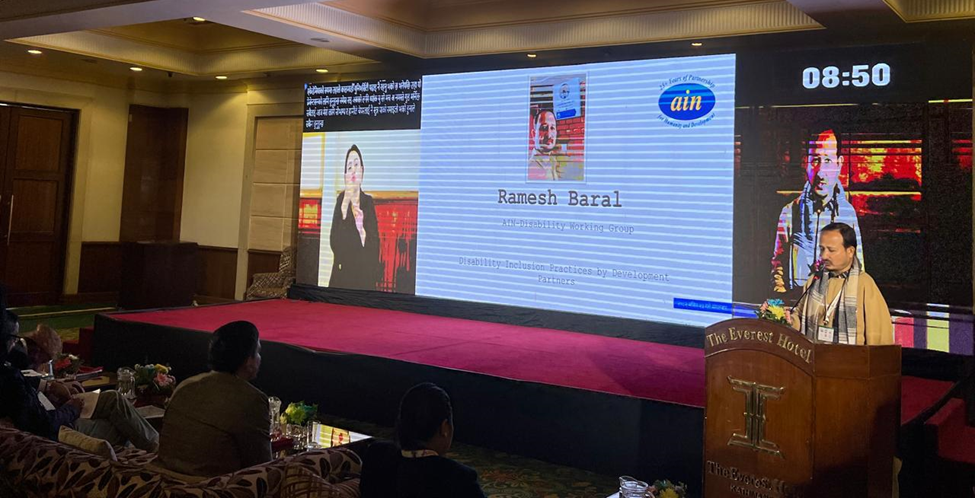
He further pointed out systemic barriers affecting meaningful inclusion. Many OPDs remain concentrated in former district headquarters, leaving large populations of persons with disabilities outside their coverage. Policy gaps are equally evident, especially at the local level, where disability-related policies beyond the disability card distribution mechanism are largely absent. Mr. Baral stressed that with federalism, local governments now possess authority to formulate context-specific policies, which should be leveraged to advance inclusion.
Reaffirming Nepal’s commitment to the CRPD, he called for stronger coordination among government bodies, civil society, and the private sector. He noted that procedural hurdles and the absence of clear guidelines obstruct progress. Drawing a parallel with existing Social Welfare Council (SWC) guidelines that mandate INGOs to allocate 1% of their budget for disaster risk reduction, he advocated for similar mandatory provisions to ensure the systematic inclusion of persons with disabilities across all programs and budgets.
Keynote Address 3: Ministry of Women, Children and Senior Citizens
Ms. Durga Dahal, Under Secretary at the Ministry of Women, Children and Senior Citizens (MoWCSC), highlighted the existing legal and policy provisions that safeguard the rights and inclusion of persons with disabilities in Nepal. She noted that the Constitution and relevant laws guarantee equality, the right to education, and non-discriminatory employment practices.
The government has introduced several supportive measures, including:
- Free higher education for persons with disabilities
- Special education for individuals with intellectual disabilities
- Scholarships and accessible learning materials
- Provisions for assistive devices across all provinces
- Free health services and health insurance
- Therapy and counseling services
- Reserved hospital beds
- Social security benefits
- Hostel facilities for persons with severe disabilities
Ms. Dahal further emphasized quota arrangements such as the 5% reservation in the Civil Service Act, tax concessions, low-interest loans, vocational training, and self-employment programs. She also mentioned ongoing efforts to ensure disability-friendly communication services and the Ministry of Communication’s call for collaboration to make government websites fully accessible. She affirmed that disability-related programs continue to be incorporated into national fiscal planning.
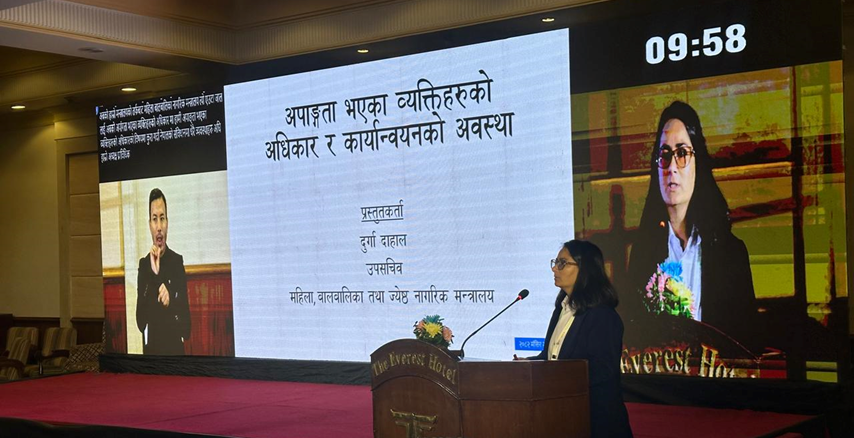
However, Ms. Dahal acknowledged several persistent challenges that hinder full inclusion. Despite existing provisions, many public infrastructures and services remain inaccessible, creating substantial barriers for persons with disabilities. Ensuring universal accessibility across all facilities continues to be difficult, and both social and institutional obstacles further limit effective implementation of inclusive policies. She underscored the need to amend and strengthen existing laws to address these gaps and to enhance coordination across sectors. Ms. Dahal concluded by reaffirming the Ministry’s commitment to advancing disability inclusion through improved policy implementation, inter-agency collaboration, and sustained investment in accessible systems and environments.
Closing Remarks of Opening Session
The opening session was formally closed by Mr. Devi Datta Acharya, Federal President of NFDN, who presented tokens of appreciation to the representatives from AIN and the Ministry of Women, Children and Senior Citizens.
Mr. Hari Datta Joshi, Chief Commissioner of the National Inclusion Commission and Chief Guest of the symposium, delivered closing remarks for the opening session. He highlighted the Commission’s ongoing efforts and challenges in strengthening disability inclusion across the country. He noted that although the Commission is currently operating with only three members, it has maintained its presence in all 77 districts and has already conducted programs in 67 of them.
He emphasized that the Government of Nepal remains committed to fulfilling its obligations under international human rights instruments such as the CRPD, Universal Declaration of Human Rights (UDHR), and other UN charters.
Technical Session I: OPD Presentations on GDS Commitments
The technical session was moderated by Mr. Santosh K.C., President of the National Deaf Federation Nepal (NDFN). This session provided a platform for OPDs who participated in GDS 2025 to share their experiences, learnings, and formal commitments.
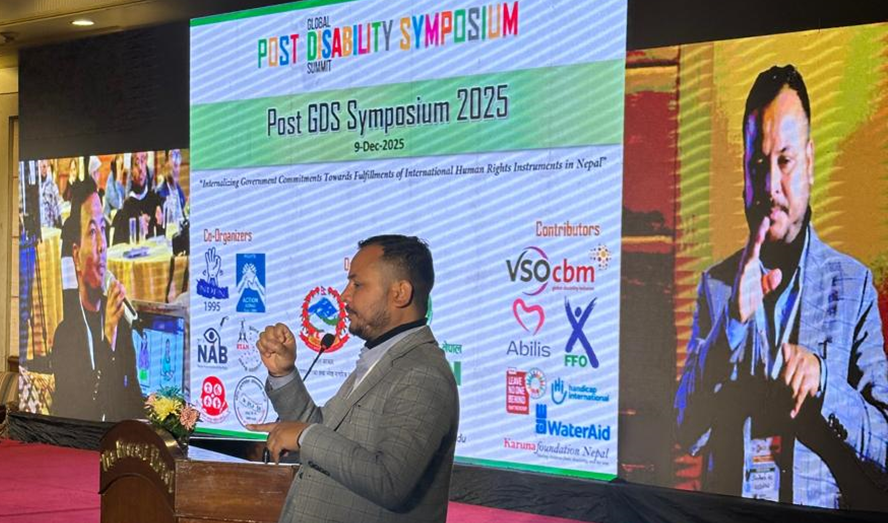
ADRAD: Joint Commitments of OPD Consortium
Presented by Dr. Birendra Raj Pokharel, Disability Inclusion Expert and Executive Director of ADRAD
Dr. Pokharel provided a comprehensive overview of the Global Disability Summit process and highlighted Nepal’s engagement within the global disability rights movement. He outlined the evolution of the Summit from 2018 to 2025, emphasizing the growing scale of participation, the increasing number of commitments, and the strengthened focus on translating the CRPD into tangible action. He underscored Nepal’s presence in both the Civil Society Forum and the main Summit, noting that the GDS has become a central platform for aligning national actions with global human rights instruments and promoting partnership among governments, civil society, OPDs, and development partners. He highlighted the adoption of the Amman-Berlin Declaration and various global calls to action focused on children, youth, and Indigenous persons with disabilities.
Dr. Pokharel presented the joint commitments of the OPD Consortium facilitated by ADRAD, centered on promoting inclusive and equitable education for learners with disabilities in line with CRPD and SDG 4. The key commitments include:
- Updating national policies and developing operational guidelines
- Increasing public investment in inclusive education
- Establishing early screening and intervention mechanisms
- Adopting disability-inclusive data systems
- Improving accessibility in schools
- Advancing digital and accessible learning resources (Sikai Chautari, EPUB, and DAISY formats)
- Strengthening partnerships and expanding assistive technology provision
- Creating resource centers at local levels
- Ratifying the Marrakesh Treaty to enable accessible publishing
He concluded by outlining next steps, including submitting a joint memorandum, developing a coordinated action plan, and enhancing collaboration to ensure that GDS commitments are effectively implemented and sustained over time.
Nepal Association of the Blind (NAB): Marrakesh Treaty Ratification
Presented by Mr. Khom Raj Sharma, Inclusion Adviser at NAB
Mr. Sharma highlighted the global “book famine” affecting over 285 million visually impaired people and contextualized Nepal’s challenges, where more than 147,000 blind and partially sighted persons still lack access to accessible learning materials. He explained the purpose and significance of the Marrakesh Treaty—a humanitarian, rights-based copyright agreement that enables the creation and cross-border exchange of accessible format books.
While 126 countries, including all major South Asian neighbors, have ratified the treaty, Nepal remains the only country in the region yet to do so, resulting in missed opportunities to access over 700,000 accessible titles and to support inclusive education, competitive examinations, and digital literacy.
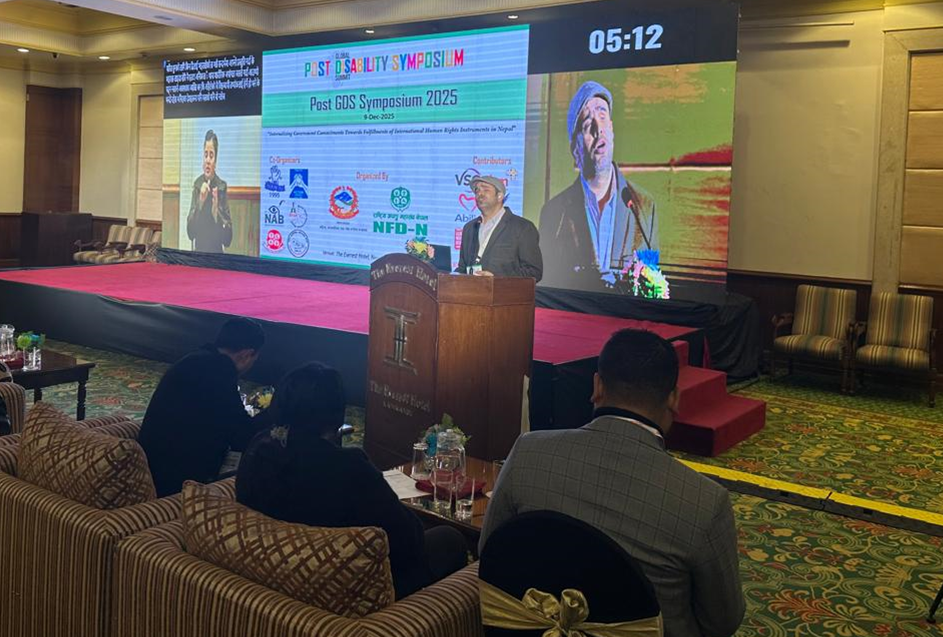
Mr. Sharma underscored that ratifying the Marrakesh Treaty would directly support Nepal’s commitments under the CRPD and the Amman-Berlin Declaration by expanding access to information, education, and cultural participation. He outlined both political and structural reasons behind delays and presented a practical six-month national roadmap for ratification followed by a twelve-month implementation plan focused on:
- Joining global book-sharing systems
- Reforming copyright legislation
- Strengthening accessible textbook production
Emphasizing the socio-economic benefits—including improved employment prospects and reduced production costs—he called for unified advocacy by OPDs, policy prioritization by government, and coordinated support from development partners to end Nepal’s long-standing book famine.
Nepal Disabled Women Association (NDWA): Gender and Intersectionality
Presented by Ms. Sushmita Shrestha, Program Manager of NDWA
Ms. Shrestha highlighted the need to view disability inclusion through a gendered and intersectional perspective. NDWA—active across 45 districts—emphasized that women and girls with disabilities experience multiple, overlapping forms of discrimination shaped by gender inequality, disability stigma, caste, ethnicity, geography, age, and poverty. These intersecting barriers reinforce exclusion from education, healthcare, sexual and reproductive health and rights (SRHR), employment, leadership roles, and social protection, while also heightening vulnerability to violence.
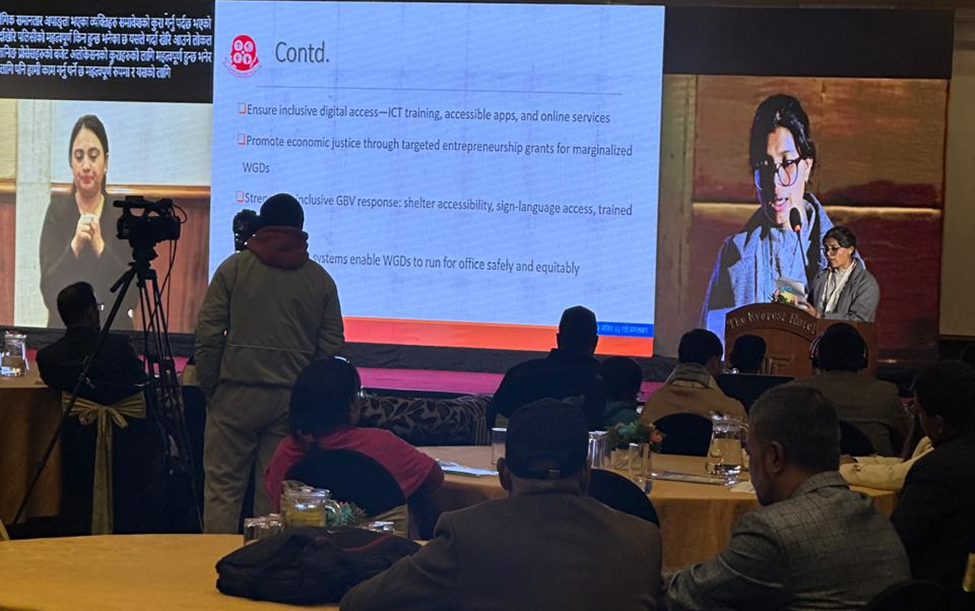
The presentation explained that the Global Disability Summit commitments in areas such as inclusive education, economic empowerment, healthcare, data, humanitarian action, and meaningful participation must be contextualized and localized to ensure they translate into tangible improvements within Nepal’s policy and service-delivery systems.
The presentation explained that the Global Disability Summit commitments in areas such as inclusive education, economic empowerment, healthcare, data, humanitarian action, and meaningful participation must be contextualized and localized to ensure they translate into tangible improvements within Nepal’s policy and service-delivery systems.
Ms. Shrestha detailed NDWA’s priorities in line with the GDS 2025 agenda:
- Strengthening gender-responsive inclusive education
- Expanding accessible health and rehabilitation services
- Enhancing economic empowerment initiatives tailored to women and girls with disabilities
- Improving data, monitoring, and accountability systems disaggregated by sex, disability, caste, and geography
- Targeted gender-based violence (GBV) prevention and survivor support
- Expanded leadership and political participation opportunities
- Reforms that embed intersectionality into national and local governance
Practical entry points included involving women and girls with disabilities in planning committees, investing in women-led OPDs, training service providers on intersectionality, advancing inclusive digital access, and ensuring political and institutional environments that enable safe and equitable participation. Together, these actions aim to build a more inclusive future where the rights and voices of women and girls with disabilities are fully recognized.
Blind Youth Association Nepal (BYAN): Disability-Inclusive Comprehensive Sexuality Education
Presented by Mr. Nir Shrestha, Director of BYAN
The presentation highlighted BYAN’s active engagement in GDS 2025, where the organization showcased its leadership in promoting disability-inclusive Comprehensive Sexuality Education (CSE). BYAN’s participation included extensive pre-summit preparation, national consultations, and representation in global youth advocacy platforms.
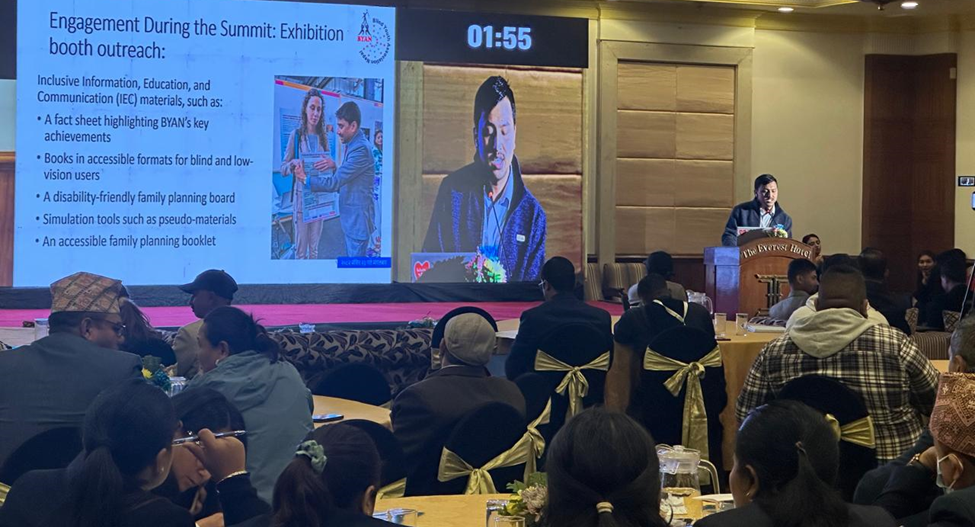
Through its exhibition booth, BYAN demonstrated a wide range of accessible resources—such as inclusive IEC materials, tactile learning tools, and accessible SRHR publications—designed to strengthen awareness and empower youth with disabilities. The presentation underscored that BYAN’s visibility at the summit enhanced collaboration with international partners, amplified youth voices, and positioned the organization as a key contributor to global disability inclusion efforts.
Mr. Shrestha emphasized BYAN’s formal GDS commitments focused on:
- Advancing disability-inclusive CSE and SRHR
- Strengthening inclusive SRH services
- Producing accessible learning materials
- Building capacity of service providers and government agencies
- Ensuring meaningful participation of young persons with disabilities in policy processes
The presentation highlighted persistent barriers faced by persons with disabilities—such as stigma, inaccessible health services, and exclusion from mainstream SRHR programming—and positioned BYAN’s commitments as critical to addressing these inequities. It concluded with a strong call to action urging policymakers, development partners, and OPDs to prioritize disability-inclusive CSE, invest in accessible communication tools, and support youth-led advocacy to ensure that no one is left behind.
National Deaf Federation Nepal (NDFN): Sign Language Rights and Deaf Community
Presented by Mr. Sitaram Oja, General Secretary of NDF-N
Mr. Oja delivered a comprehensive presentation highlighting the situation of the Deaf community in Nepal and NDFN’s ongoing efforts. He emphasized that the Deaf community is a linguistic and cultural minority that primarily communicates through Nepali Sign Language (NSL). Despite Nepal having over 102,000 persons with hearing disabilities, many still face systemic exclusion from quality education, health services, employment, and accessible information.
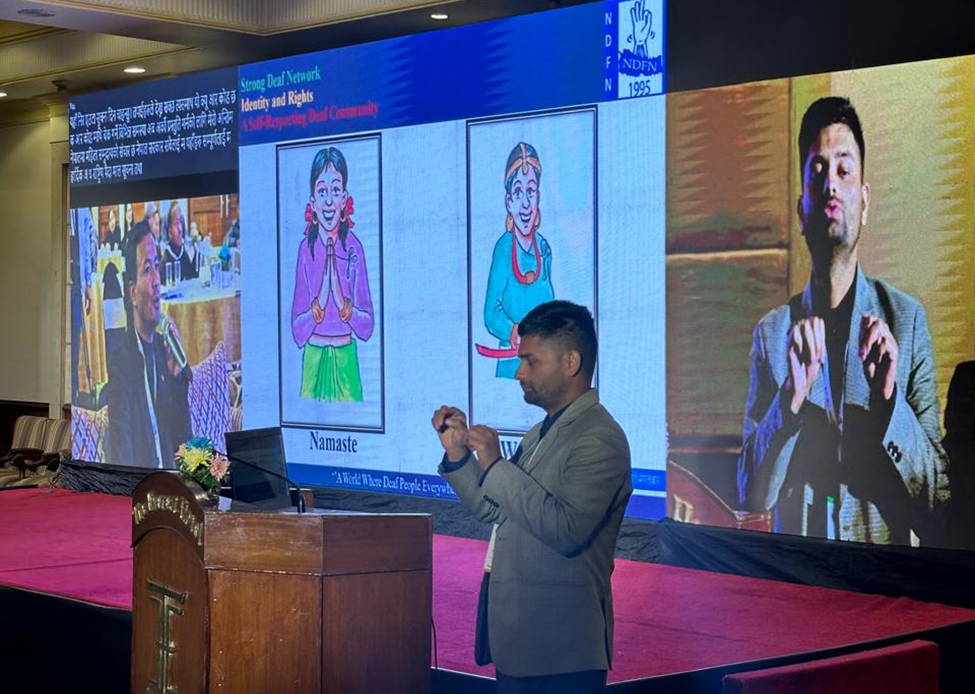
In remote areas, harmful terminology and deep-rooted stigma persist, while girls and women with hearing disabilities remain especially vulnerable to violence and discrimination. Mr. Oja underscored long-standing issues including:
- Denial of driving licenses to Deaf citizens
- Inadequate investment in NSL development
- Absence of government recognition for sign language
- Lack of research systems and institutional mechanisms for sign language promotion
The presentation outlined NDFN’s organizational role as the umbrella body representing Deaf individuals across Nepal, supporting 22 special schools and 174 resource classes nationwide. NDFN’s core work focuses on:
- Strengthening the Deaf rights movement
- Building capacity and promoting NSL
- Expanding access to interpreters
- Ensuring meaningful participation in education, public services, justice, and employment
- Major gaps identified include:
- Severe shortage of trained and certified sign language interpreters
- Limited availability of Deaf-friendly teaching and learning materials
- Lack of inclusive media and emergency communication
- Insufficient government budget allocations
- Way Forward: Mr. Oja called for:
- Establishment of a National Sign Language Research and Training Centre
- Formal recognition of NSL
- Development of a national interpreter certification system
- Investment in accessible information systems
- Inclusion of Deaf individuals in all sectors with reasonable accommodation
He stressed that “there are no human rights without sign language rights,” reaffirming NDFN’s vision of building a dignified and self-respecting Deaf community where all Deaf people can sign anywhere.
Interactive Q&A Session
Following the OPD presentations, the floor was opened for questions from participants. Notable inquiries included questions about GDS commitments on Article 12 of the CRPD (equal recognition before the law and supported decision-making) and commitments made for persons with albinism. The speakers addressed these questions comprehensively, demonstrating the breadth of issues covered by the GDS commitments.
Mr. Devi Datta Acharya, President of NFDN, presented tokens of appreciation to all OPD presenters, and the technical session on OPD presentations was formally closed.
Technical Session II: Development Partners’ Presentations and Government Responses
After the completion of OPD presentations, the symposium moved into the second technical session which centered on thematic reflections from development partners along with responses by relevant government ministries. This session was moderated by Mr. Kushal Neupane, Senior Project Coordinator of NFDN.
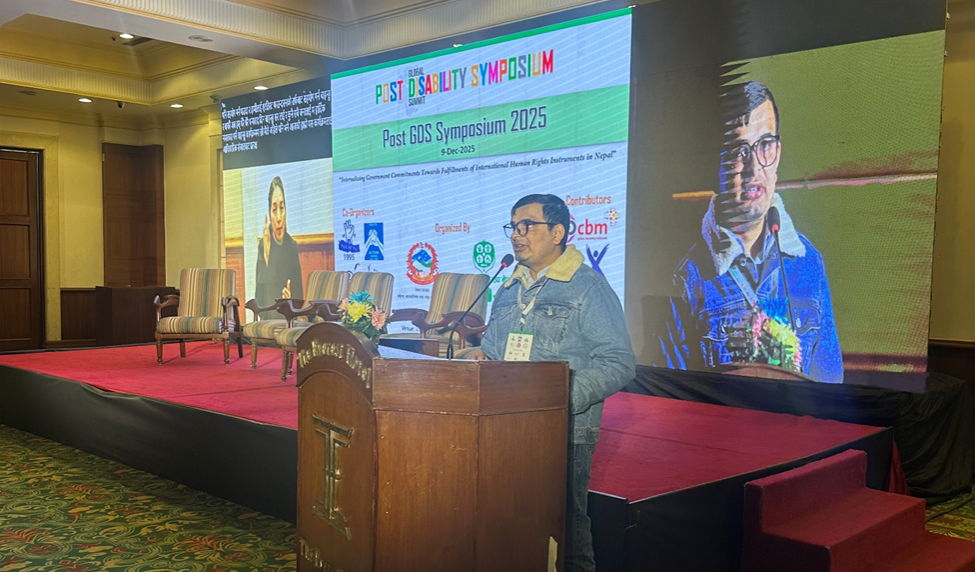
Who explained that these presentations represented a direct effort to align national systems with the Global Disability Summit commitments and Nepal’s obligations under international human rights instruments.
The first presentation was delivered by Mr. Bimal Poudel, Inclusion Adviser at CBM Global Disability Inclusion. He provided a comprehensive overview of Nepal’s progress and highlighted several persistent gaps following GDS 2025. According to Mr. Poudel, disability inclusion in Nepal remains limited across political, educational, health, employment, and justice sectors. Although Nepal has adopted several policies that theoretically support inclusion, implementation remains weak due to inaccessible infrastructure, insufficient resources, lack of trained personnel, and confusion between special and inclusive education practices. Public spaces and ICT services also remain largely inaccessible, aggravating exclusion of intersectional groups, particularly women and marginalized communities.
Mr. Poudel further emphasized that absence of disability-based SDG baselines and weak budgeting have restricted meaningful transformation. His presentation also devoted significant attention to disability data, noting that existing systems such as Census, DHS, EMIS, HMIS, and social protection databases remain fragmented, medically oriented, and frequently underreported. He strongly encouraged the standardization of the Washington Group Questions, strengthening OPD-led data processes, establishing independent monitoring mechanisms, and ensuring meaningful participation of OPDs in planning and oversight.
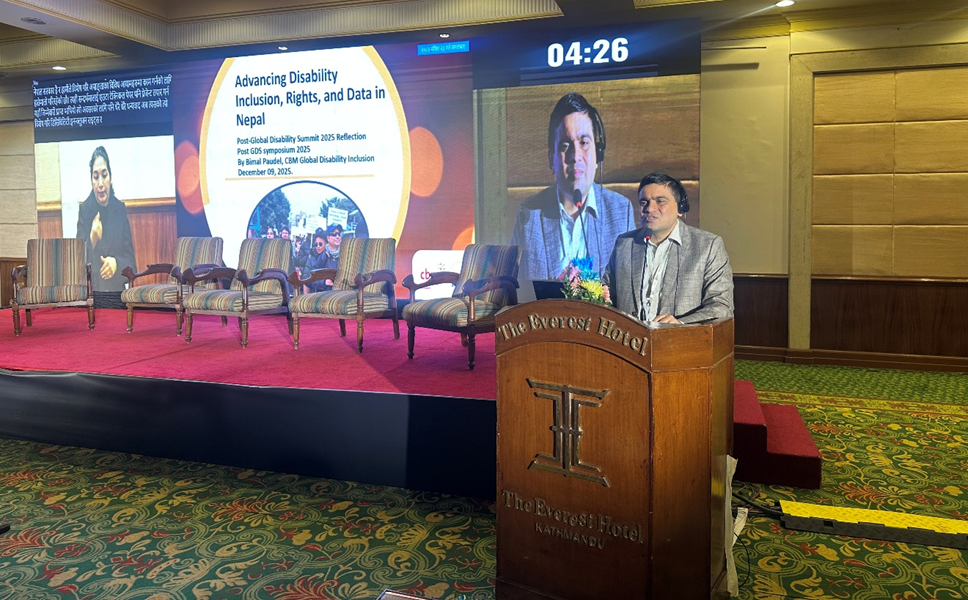
While outlining CBM Global’s commitments through 2027, he highlighted increased financial support to OPDs, organizational strengthening, flexible long-term funding modalities, and focused engagement with underrepresented groups, particularly women and girls with disabilities.
The second presentation was delivered by Mr. Rabindra Shrestha, Rehabilitation Officer at Humanity & Inclusion (HI), who described the centrality of health and rehabilitation within global GDS priorities. He recalled that the summit places strong emphasis on Articles 11 and 32 of the UNCRPD, particularly in the context of humanitarian crisis and international cooperation. He highlighted that assistive technologies remain severely under-provided globally, with only 10–15 percent of persons with disabilities receiving the assistive products they require, and the situation is even more severe in low-income countries such as Nepal.
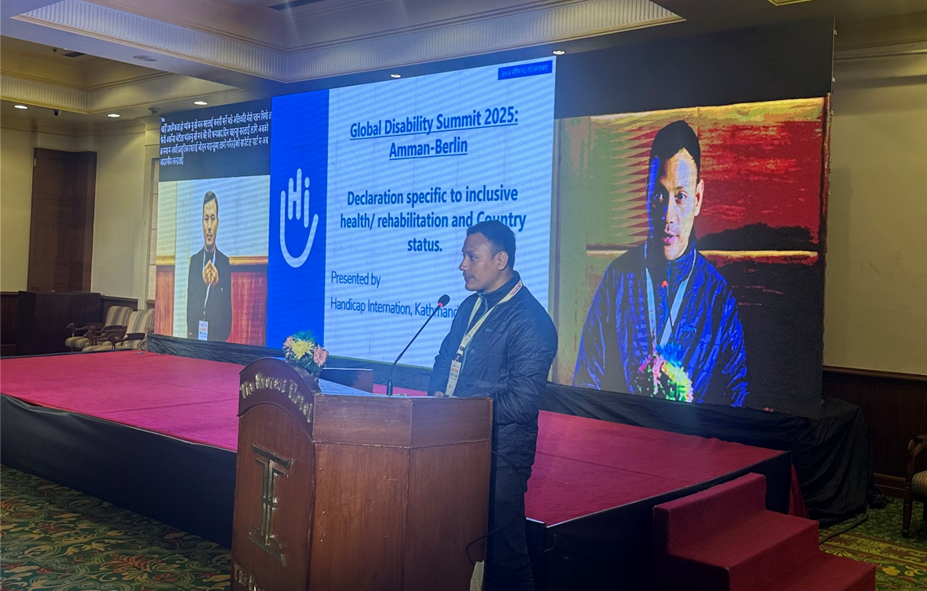
While acknowledging certain policy improvements in Nepal, he mentioned that around 83 percent of persons with disabilities continue to lack access to essential rehabilitation services. Explaining that accessibility must be understood beyond physical barriers, he stressed the importance of institutional, attitudinal, and communication accessibility as integral components of inclusion. His presentation concluded with recommendations to strengthen legal frameworks, expand the assistive technology workforce, invest in accessible procurement systems, and introduce monitoring mechanisms that ensure transparency and accountability.
This was followed by a presentation from Karuna Foundation Nepal, delivered by Ms. Rupa Sibakoti, Senior Project Coordinator. She provided a comprehensive overview of disability-inclusive employment policies in Nepal, explaining that although the Constitution and CRPD obligations provide a legal foundation, implementation remains weak due to systemic barriers. These include lack of clarity on reasonable accommodation, limited engagement with private sectors, weak quota enforcement, and insufficient disability-disaggregated data.
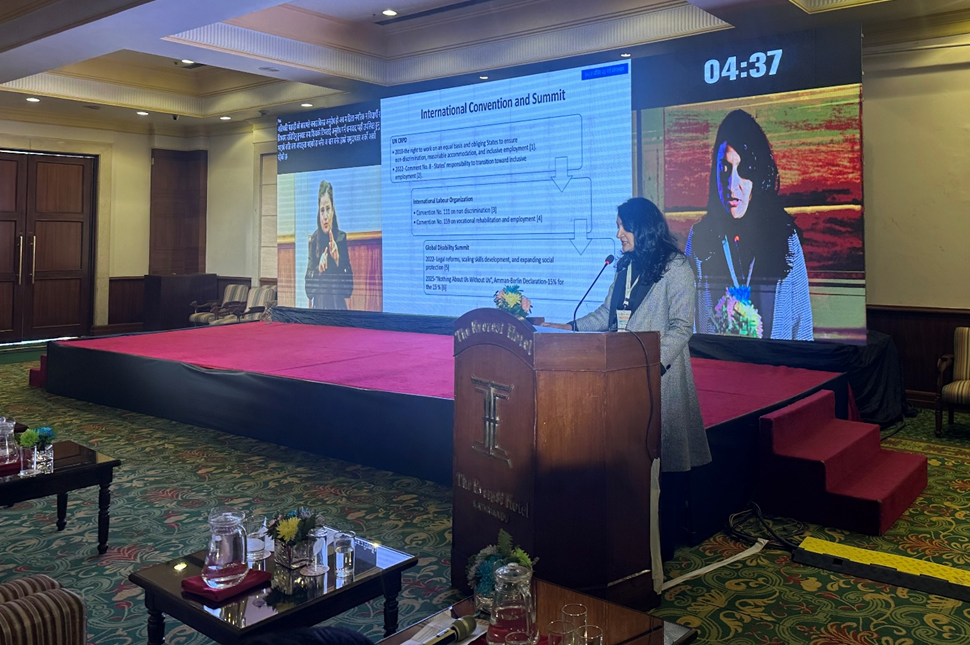
She noted that non-ratification of ILO Convention 159 has limited Nepal’s ability to strengthen its vocational rehabilitation systems. Ms. Sibakoti stressed the need for clear guidelines and financing mechanisms for reasonable accommodation, stronger monitoring of public sector quotas, and enhanced incentives for private sector recruitment such as tax rebates and procurement requirements. She also reiterated that inclusive employment contributes significantly to national productivity and promotes social justice by enabling persons with disabilities to participate equally in economic life.
The next reflection was presented by Mr. Narayan Silwal, Inclusive Education Lead at VSO Nepal, who highlighted Nepal’s achievements and remaining challenges in the field of inclusive education. He explained that inclusive education requires a transformative shift in teaching practices, infrastructure, and learning environments, rather than merely placing children with disabilities into mainstream classrooms.
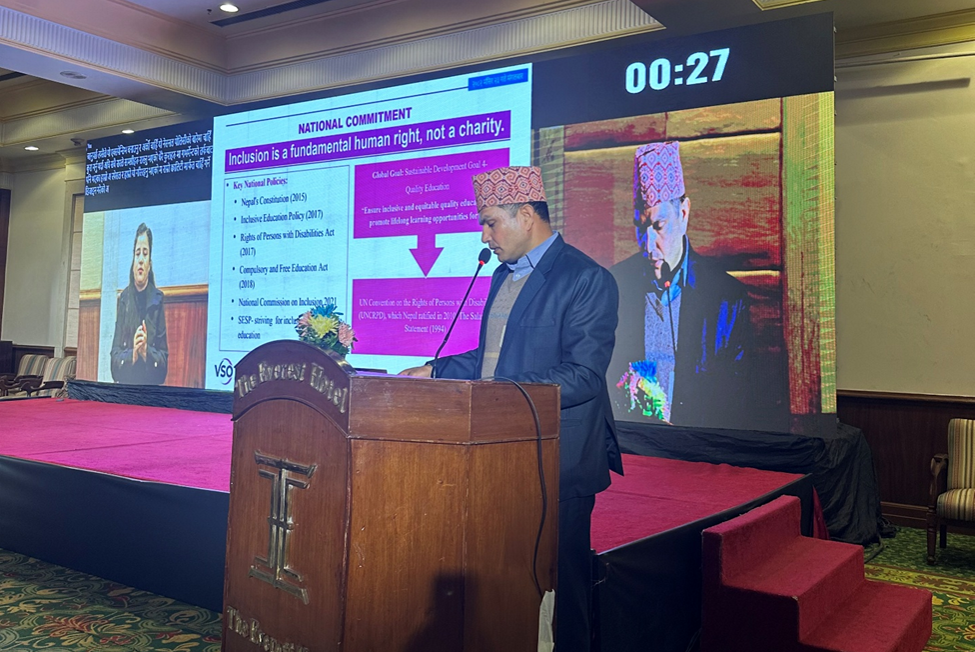
Noting that special schools, integrated models and resource classes have expanded over recent years, he acknowledged that several gaps remain, especially in applying universal design principles in school infrastructure, integrating disability-inclusive approaches into teacher training, and addressing societal attitudes and stigma. He emphasized that meaningful and sustained collaboration between government, communities, and civil society is necessary to translate policy commitments into everyday classroom practice.
The final presentation of this session was delivered by Mr. Binesh Roy, WASH Programme Manager at WaterAid Nepal, who shared experiences from the GAINS project in Bardiya. He explained that WaterAid has supported more than thirty schools to establish universal, accessible and disability-friendly WASH facilities, accompanied by structured safety and accessibility assessments. Alongside infrastructure improvements, WaterAid has also invested in awareness and capacity building of teachers and local officials on human rights, child rights, disability rights, sanitation, and menstrual hygiene management. Through community-based awareness activities, disability screenings, orientations on social security benefits, and the distribution of assistive devices, the project has demonstrated how accessible WASH can contribute directly to educational inclusion and the realization of child rights.
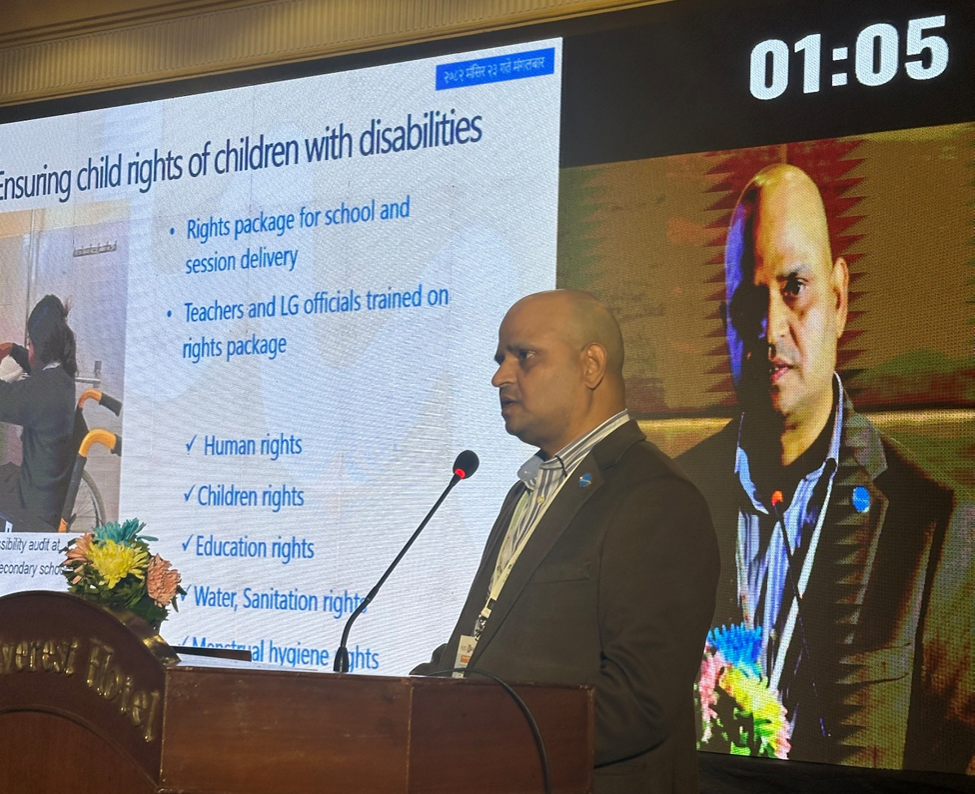
At the conclusion of development partner presentations, NFDN expressed appreciation by presenting tokens of gratitude to the speakers.
Presentation from Government Ministries
Government representatives then provided thematic responses, beginning with a presentation from the National Disaster Risk Reduction and Management Authority (NDRRMA). Ms. Sila Timalsina, GEDSI Focal Person, highlighted the legal, policy and institutional frameworks guiding disaster management in Nepal, including national legislation and international instruments such as CEDAW, UNCRPD, ILO 169, the Sendai Framework and the SDGs.
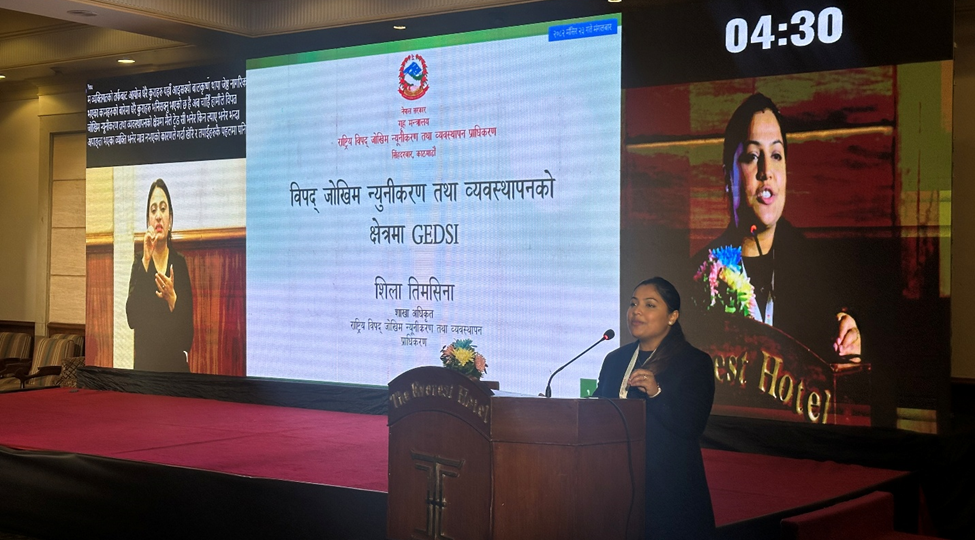
She explained that despite these provisions, persons with disabilities continue to face disproportionate risks during disasters due to a lack of disaggregated data, limited preparedness mechanisms, insufficient resources and inadequate targeted interventions. She also introduced the Authority’s Strategic Action Plan for GEDSI, which seeks to strengthen inclusive DRR, promote meaningful participation of marginalized groups, support accessible reconstruction practices, and expand multi-hazard early warning systems across the country.
This was followed by a presentation from the Ministry of Labour, Employment and Social Security by Under-Secretary Mr. Humnath Parajuli. He highlighted the demographic and participation gap within Nepal’s labour force and noted that although persons with disabilities make up more than two percent of the national population, their representation in employment remains disproportionately low. He outlined relevant constitutional provisions, national laws, and GDS-related commitments that seek to promote equitable access to employment. While acknowledging progress in reservation quotas, entrepreneurship opportunities, and vocational training, he recognized continuing challenges related to implementation, limited compliance with quota provisions, and insufficient accessible workplaces. He reiterated the Ministry’s commitment to strengthening labor audits, promoting accessible training centers, prioritizing entrepreneurship financing, and enhancing coordination with local governments and OPDs.
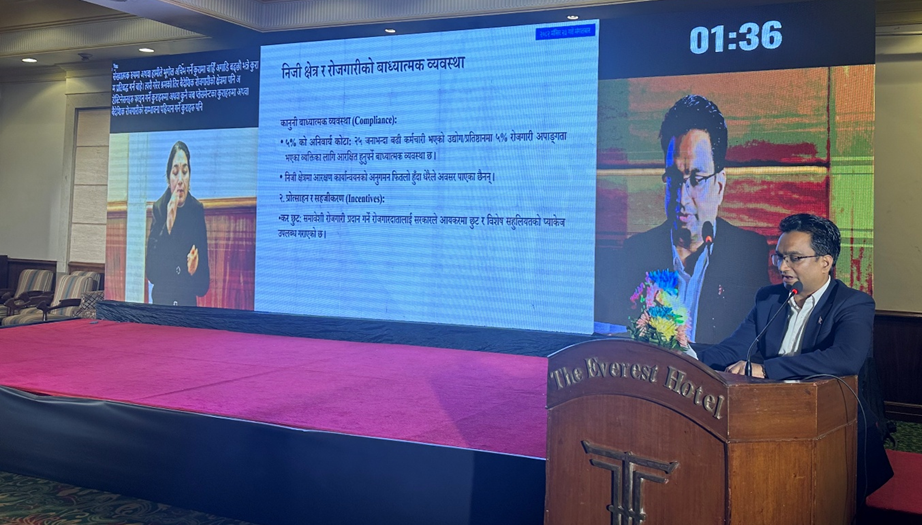
After government reflections, NFDN once again extended appreciation to presenters, formally concluding the technical session. A lunch break followed, after which participants reconvened for the thematic working group discussions.
Thematic Group Work and Drafting of the Kathmandu Call for Action
Following the lunch break, participants were divided into eleven thematic groups covering areas such as inclusive WASH, gender equality, child rights, accessibility and reasonable accommodation, independent living, employment, social protection, citizen generated data, and youth participation.
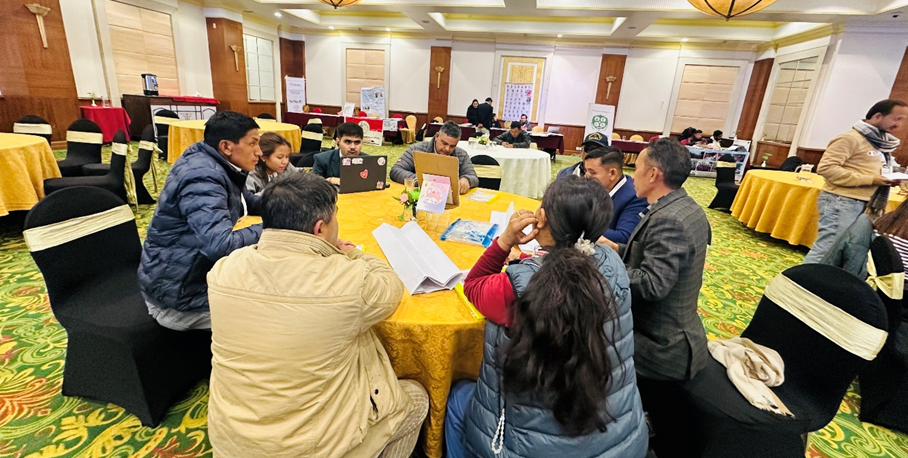
Each group held intensive discussions and compiled key recommendations which were later consolidated into the draft text of the “Kathmandu Call for Action,” comprising Forty-Three points aimed at strengthening Nepal’s commitment to implementing the Amman-Berlin Declaration and other international human rights instruments. The draft was reviewed collectively and aligned with GDS thematic concerns, Nepal’s CRPD obligations, and national development priorities.
Closing Session and Formal Handover
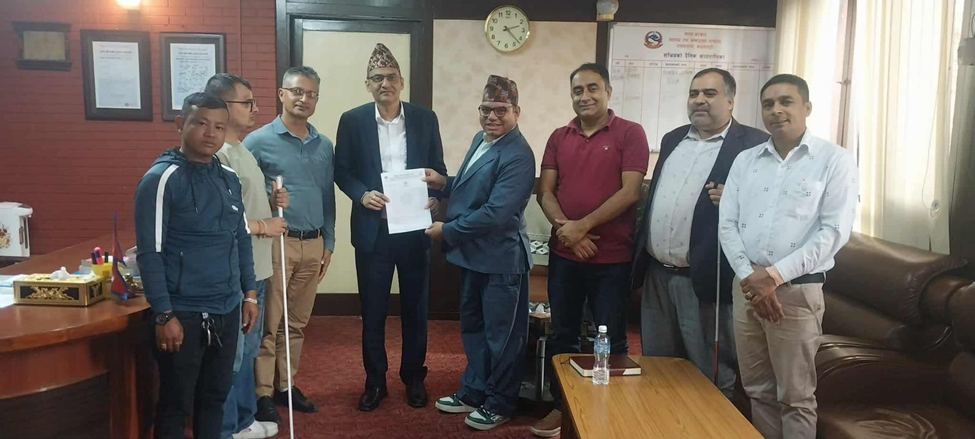
During the closing session, the draft forty-one-point declaration was formally read by the Federal President of NFDN and was subsequently handed over to the Chief Guest for onward submission to the Right Honorable Prime Minister of Nepal. Representatives from the Ministry of Women, Children and Senior Citizens congratulated NFDN and all stakeholders for successfully organizing the symposium and emphasized continued governmental commitment to advancing disability inclusion in Nepal. The Chief Guest delivered closing remarks acknowledging the efforts of OPDs, development partners, government representatives and civil society actors who contributed to promoting national ownership of the Amman-Berlin Declaration.
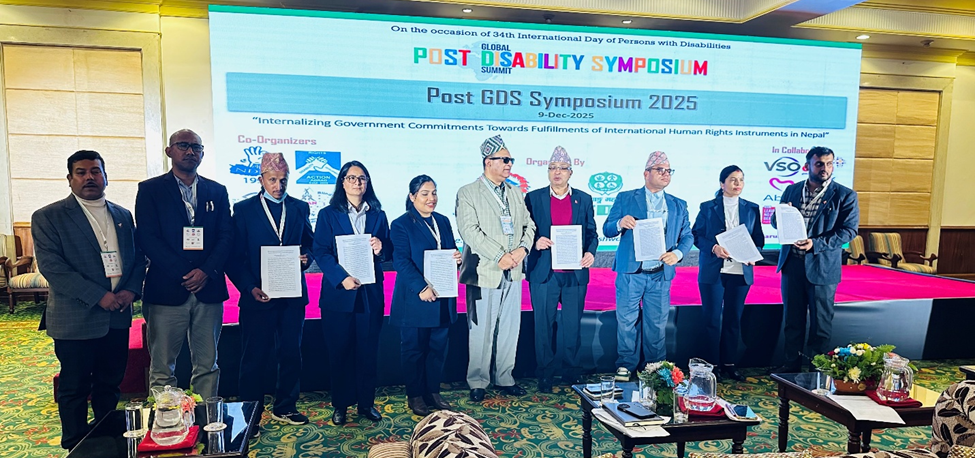
As the event drew to a close, the Master of Ceremony offered thanks to all participants and organizations involved in making the symposium successful. The Federal President of NFDN concluded by expressing gratitude to everyone whose contribution made the symposium impactful and meaningful for the disability movement of Nepal.
Conclusion
The Post-Global Disability Symposium 2025 marked a pivotal moment for disability inclusion in Nepal, successfully transforming a missed global opportunity into a definitive national mandate. By convening a powerful coalition of government representatives, Organizations of Persons with Disabilities (OPDs), and development partners, the event formally internalized the Amman-Berlin Declaration, securing a preliminary commitment from the Ministry of Women, Children and Senior Citizens to contextualize its global promises. The resulting “Kathmandu Call for Action,” a 43-point declaration, now stands as a clear, foundational agenda that aligns international human rights obligations under the UNCRPD with Nepal’s national development priorities, providing a collective, disability-led roadmap for future advocacy and accountability on the path to GDS 2028. While acknowledging the persistent gap between strong policy frameworks and ground-level realities—particularly concerning accessibility and data fragmentation —the symposium established the essential political awareness and multi-stakeholder partnership necessary to translate these vital frameworks into meaningful, sustained change for persons with disabilities across the country.
Media coverage links
Post-Global Disability Symposium 2025 Concludes with a National Call for Action
Summary of Participants
| Types of Disability | Male | Female | Total |
| Autism | 2 | 1 | 3 |
| Parents | 3 | 4 | 7 |
| Blind | 15 | 5 | 20 |
| Deaf | 4 | – | 4 |
| Intellectual Disability | 1 | – | 1 |
| Speech | 1 | 1 | 2 |
| Physical | 12 | 10 | 22 |
| Hemophilia | 1 | – | 1 |
| Without Disability | 46 | 36 | 82 |
| Total | 85 | 57 | 142 |
Draft of Declaration
Share this post:


